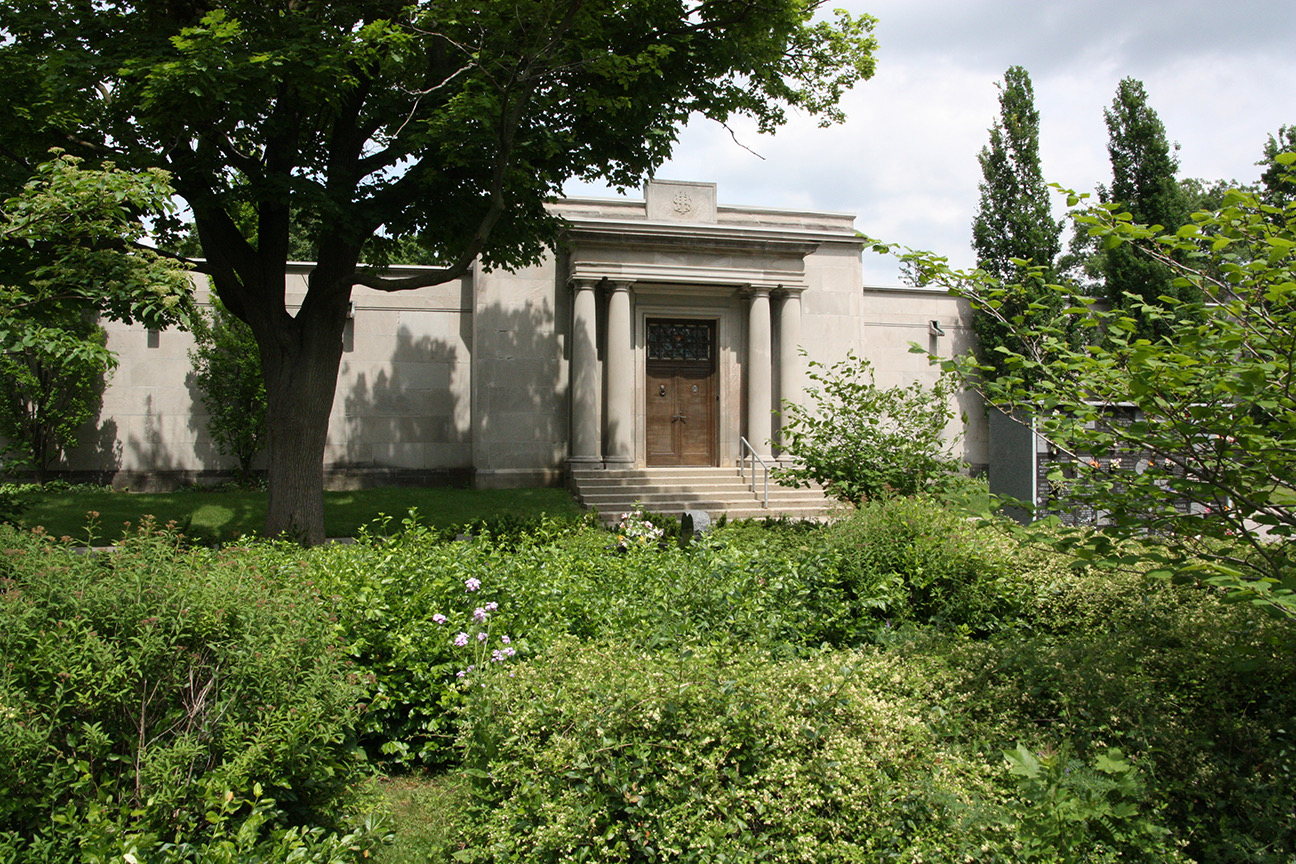
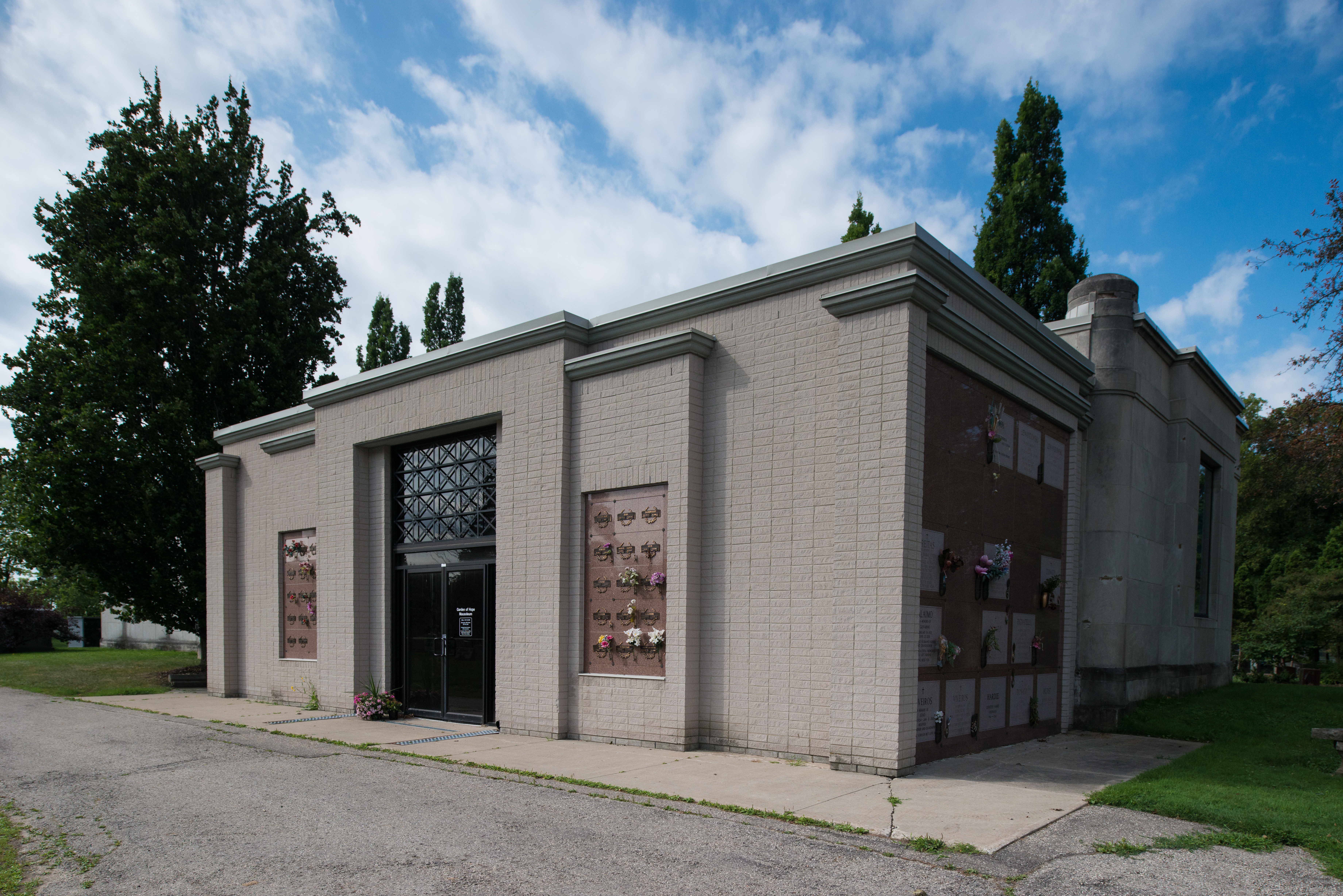
In the Protestant mausoleum, three pictorial stained glass windows illuminate three separate semi-private family crypt rooms (Seagram, Pequegnat, Hibner) in the middle section. The transom above the entrance is a wreath and garland design in opalescent and iridescent glass. Two more stained glass windows, at the end of each wing, are particularly large and attractive: one depicts a vivid sunrise scene and the other a moody sunset, both landscapes viewed through silhouetted trees. s. Most (possibly all) stained glass windows were executed by the Luxfer Prism Co. of Toronto, and many are signed
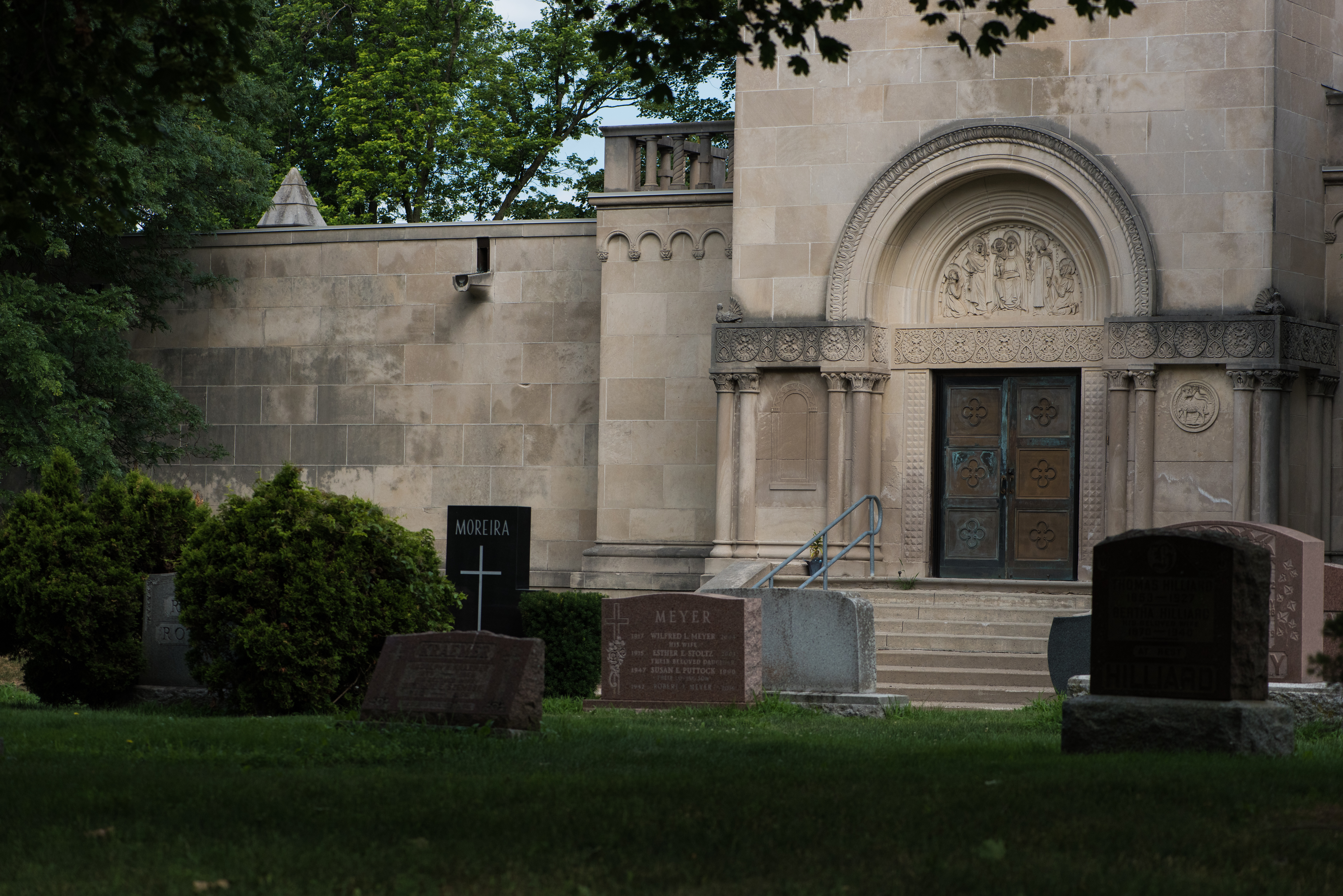
The stained glass in the Catholic mausoleum is more overtly religious. One large corridor-end window depicts Eucharistic elements circled by a wreath of flowers and foliage. The other features a crown, a cross, and other Christian symbols circled by a wreath of evergreen cones and boughs. Grapes and grape leaves form a border in both windows. The middle section of the Catholic mausoleum, with three blind-arched bays on each side, is configured as a chapel nave, with a marble alter, foldable seating, and a casket hoist system set into the floor that connects to the received vault in the basement level. Behind the altar, three tall hooded windows in a triple-arched arrangement, separated by columns, rest on a deep sill. These include symbols representing the four Evangelists of the New Testament (a winged lion, a winged ox, an angel and an eagle) as well as other symbols, including a dove and a phoenix. Each one of six small, colourful roundel windows high up in the clerestory is centered within a large blind arch. Very slender, non-structural stone columns are arranged around the room. Ornamentation on the interior stone echoes the Romanesque Revival of the façade.
All of the Catholic mausoleum windows were designed by James Blomfield, an English -born Canadian designer, painter, and stained glass artist who figured in the Arts and Crafts movement in the Vancouver area before moving to Ontario in the 1920's. Blomfield designed many windows for Luxfer Prism and Canada Mausoleums, and he is interred in the large Bayview mausoleum in Hamilton, built by Canada Mausoleums and containing windows of Blomfield's own design.
Polished domestic and European marble is used extensively throughout both interior and exteriors: white, black, and maroon in the Catholic; white, cream, black, and green in the Protestant. The middle section of the latter has marble walls with pilasters and other understated ornament, and above, a decorative plaster frieze and deeply coffered ceiling. There are two small benches by the Globe Furniture Co. of Waterloo, and bronze gates on the three family crypt rooms, two of which contain marble benches.
Many names on the crypts would have a familiar ring for local history enthusiasts. E.F. and Edna (MacLachlan) Seagram, Thomas and Dorothy (Pearson) Seagram, Paul and Linda (Fleischer) Pequegnat, Daniel and Elizabeth (Sherk) Hibner, Dorothy Shoemaker, ford S. and Anna (Henrich) Kumpf, J.M. and Helena (Ahrens) Schneider, C.F. and Louise Thiele, and A.R. Goudie are just a few.